About Neurolexi
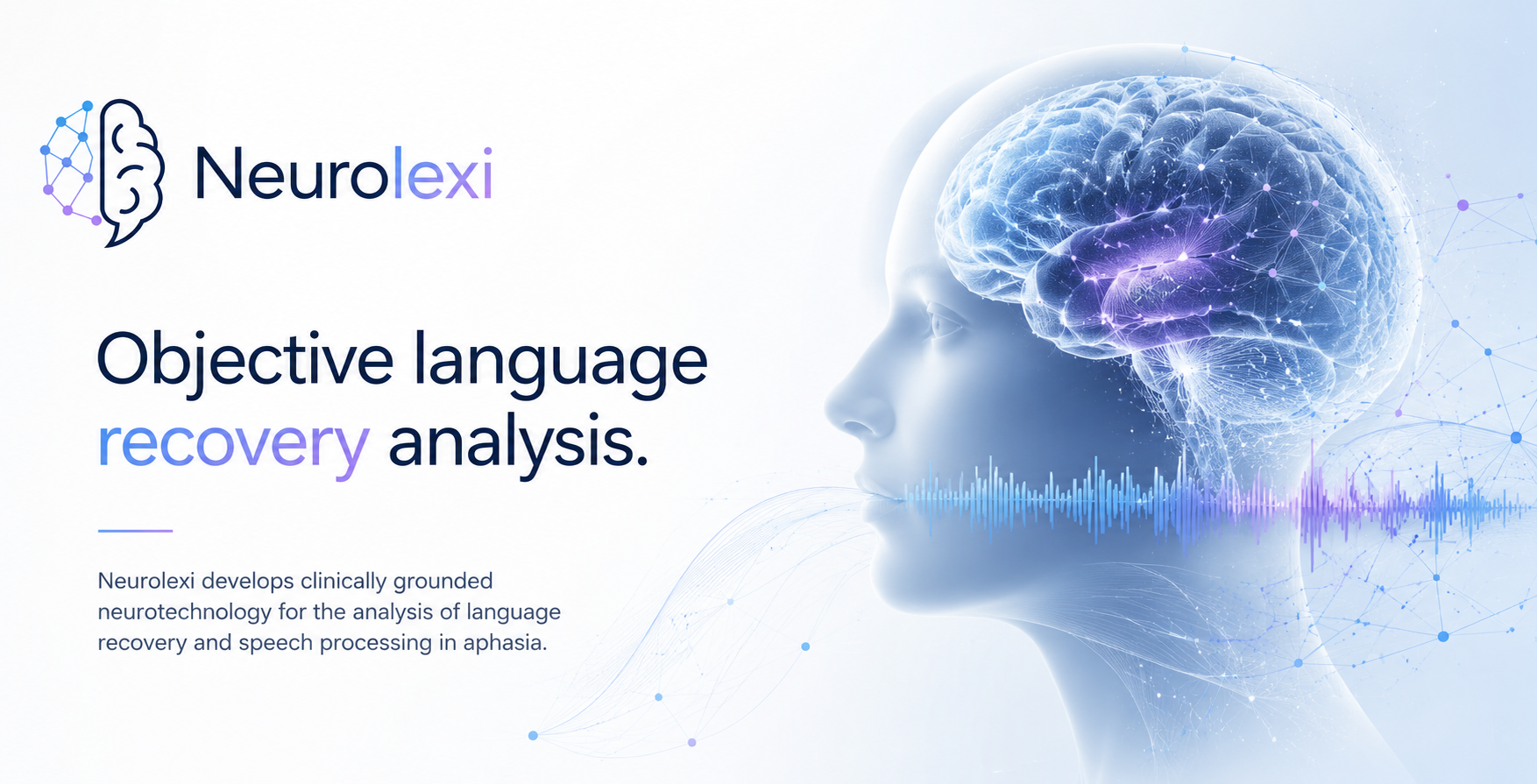
Neurolexi combines neuroscience, speech-language therapy and speech signal analysis to create objective tools for language recovery assessment.
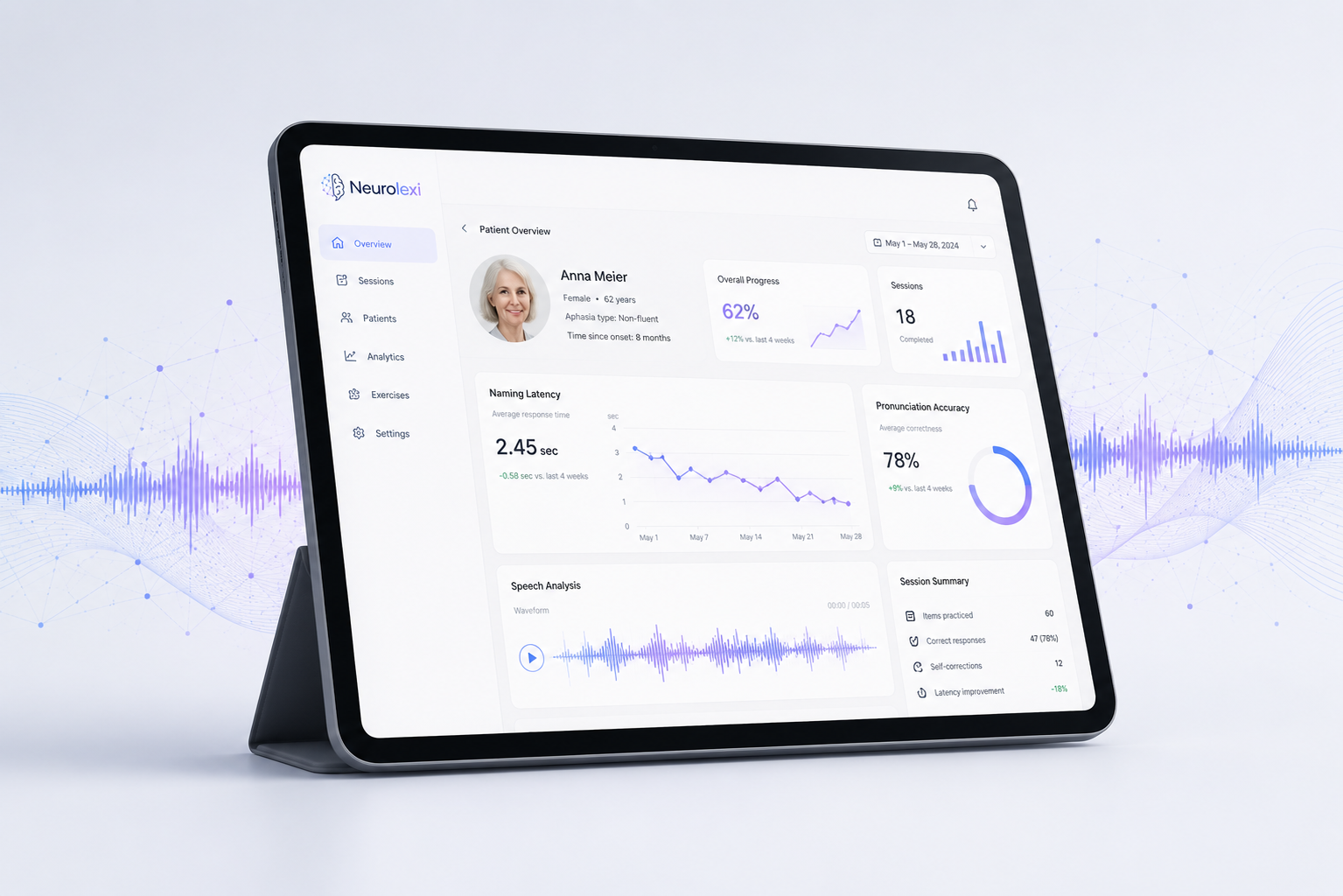
Our work focuses on aphasia and picture naming tasks, enabling the analysis of speech onset, pronunciation accuracy, and naming latency through clinically grounded methodologies.
The long-term vision of Neurolexi is to contribute to the future of digital neurorehabilitation through research-driven neurotechnology.
Research Partner

Clinical Research
The scientific foundation of Neurolexi is based on clinically tested naming latency analysis and speech processing research conducted in collaboration with Swiss research institutions.
Neurolexi combines neuroscience, speech-language therapy, and algorithmic based signal analysis to create objective tools for language recovery assessment.
Rickert E. , Altermatt S. et al., Can an initial phoneme-based algorithm improve automatic naming latency detection during picture naming tasks? A feasibility study, Biomedical Signal Processing and Control, Volume 113, Part B, 2026, 108851, ISSN 1746-8094, https://doi.org/10.1016/j.bspc.2025.108851.
S. Park, S. Altermatt et al., Evaluation of the Potential of Automatic Naming Latency Detection for Different Initial Phonemes during Picture Naming Task, 2021 43rd Annual International Conference of the IEEE Engineering in Medicine & Biology Society (EMBC), 2021, pp. 945-950, doi: 10.1109/EMBC46164.2021.9630770
Altermatt S., Kuntner K., Rickert E., Wyss S, Degen M., Reymond C., Widmer S., Blechschmidt A., Hemm S. (2020, November). Automatic detection of naming latency from aphasia patients – using an extended threshold-based method. Conf Proc EMBEC Nov 2020, p. 71.
Wyss S., Rickert E., Altermatt S., Kuntner K., Degen M., Reymond C., Widmer S., Blechschmidt A., Hemm S. (2020, November). Patient-friendly speech recognition feedback for aphasia patients. Conf Proc EMBEC Nov 2020, p. 283.
Follow Us Into the Future of Health